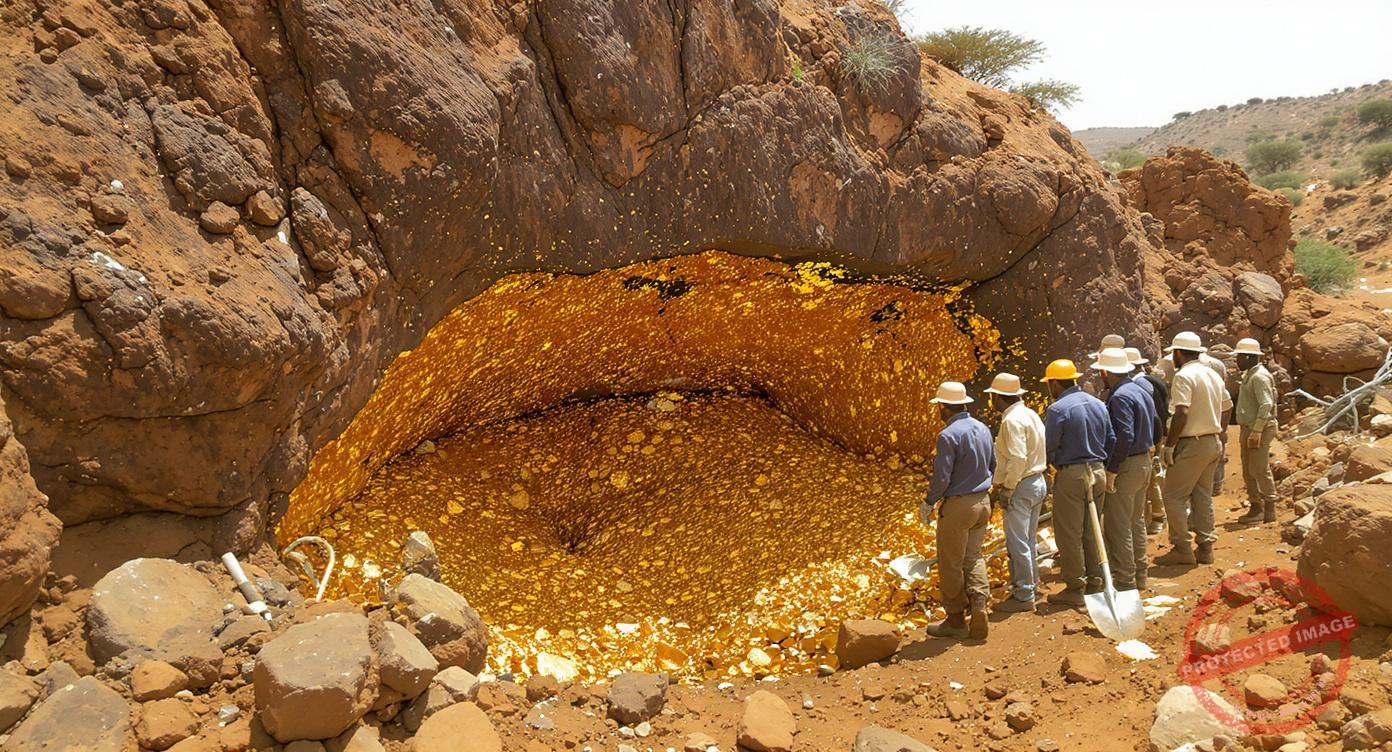
Kenya is sitting on a gold mine with the potential of $5.3 billion worth of gold. The recent announcement of the most significant gold deposit discovery in decades in the country, worth a staggering US$5.29 billion, has sent waves of excitement across the nation. It feels like we have won the geological lottery.
Headlines are buzzing with words like “boom” and “windfall.” But beyond the glitter, what does this truly mean for you and me? More importantly, how will this massive discovery impact the government’s budget and its primary tool: tax collection? Let us break it down, one golden nugget at a time.

A New Revenue Stream is More Money for the Government
Let us tackle the big question first. Will the government get more revenue?
The short answer is a resounding yes. This discovery opens up a powerful new revenue stream for the country. But it is not as simple as the government just loading gold bars into a truck.
The government can control the mines directly and sell the gold or license the mines and collect licensing fees and taxes.
Let us examine how the government will benefit.
Revenue will flow in through several channels:
a. Corporate Taxes
The mining company (or companies) involved will be subject to Kenya’s standard corporate income tax on their profits. With profits potentially in the billions, this is a considerable figure.
b. Employment Taxes
The mine will create thousands of jobs, both directly and indirectly. This means there will be more Pay-As-You-Earn (PAYE) taxes from employee salaries, and directors’ compensations and bonuses. His will boost personal income tax collections.
c. Royalties

The government will earn a percentage of the gold’s value. This is a direct payment for the resource being extracted from Kenyan soil.
d. Export Levies
Taxes on the export of the raw or refined gold. The government should insist that gold is not exported from Kenya in its raw form, but rather that some form of processing is done in the country.
Therefore, the Kenya Revenue Authority (KRA) is considering a significant and long-term expansion of its tax base. This is new money that was not there before.
Will Our Personal Tax Rates Be Reduced?
Now, for the million-dollar (or billion-dollar) question. Will this discovery lead to lower income tax or VAT rates for the average Kenyan?
I would not start planning how to spend that extra cash just yet. It is implausible.
Here is why
Discoveries like this are capital-intensive. The government will experience a significant increase in revenue, but it will also incur substantial new expenses. Think of the infrastructure needed: new roads to the mine site, reliable power, water systems, and enhanced security. That funding has to come from somewhere.
Instead of cutting existing tax rates, the government’s more brilliant play is to use this new revenue to improve public services for everyone. The goal is not necessarily to tax you less, but to make you feel like you are getting much more for the taxes you already pay.
Is Gold Revenue Better Than Tax Revenue?
This is a brilliant question. Is money from gold “better” than money from your income tax or VAT?

Not necessarily. It is just different, and it comes with a big warning label.
Tax revenue from citizens and businesses is generally stable and predictable. We go to work, we pay PAYE. We buy goods, we pay VAT. Gold revenue, however, is tied to a global commodity price. If the price of gold crashes on the world market, our government’s budget could take a devastating hit.
Relying too heavily on a single natural resource is a dangerous game. It is often referred to as the “Resource Curse.” It can lead to economic instability, corruption, and even conflict. So, gold revenue is a fantastic supplement. But it should never become a replacement for a robust, diversified tax system from a broad-based economy.
Forging a Fair Future: Steps for Equity
History is littered with countries that struck gold but failed their people. How can Kenya ensure this wealth creates equity, not inequality?
1. Radical Transparency
Every shilling earned from this gold must be publicly accounted for. We need a live, accessible dashboard showing what came in and where it went.
2. A Sovereign Wealth Fund (SWF)
This is non-negotiable. Instead of spending all the money immediately, a portion must be saved in a national investment fund. This saves for future generations and stabilizes the budget against price swings.
3. Invest in People, Not Just Projects
Revenue should fund tangible improvements, such as world-class schools, better hospitals, and more affordable universities. This “social dividend” will make every Kenyan feel like a shareholder.
4. Boost Local Content

The law must ensure that jobs, supplies, and contracts go to Kenyans and local businesses first. The community around the mine should be the first to benefit from new roads, schools, and clinics.
What Will Our Tax Revenue Be Used For?
The tax revenue from this gold should not just be absorbed into the general budget. It should be strategically targeted to develop the sector and the nation. Think of it as using the first harvest to plant an even bigger farm.
a. Infrastructure – Building roads, rail, and ports to support not just the mine, but other industries in the region.
b. Refining Capacity – Investing in facilities to process the gold right here in Kenya. This captures more of the value chain, creating more jobs and export revenue than just shipping raw materials.
c. Geological Surveys – Funding more exploration to find the next big deposit, turning this single discovery into a thriving mining industry.
d. Environmental Protection – Gold mining can be environmentally damaging. A significant portion of revenue must be ring-fenced for strict environmental monitoring and rehabilitation.
The Bottom Line
This gold discovery is a monumental opportunity. It is a chance to build a more prosperous, equitable, and developed Kenya. But the gold beneath our feet is just potential. Our true wealth lies in the wisdom, integrity, and unity we use to manage it.
Let us not just dig for gold. Let us build a golden future for all.

Next!
This gold discovery belongs to all Kenyans. Let us make our voices heard. Share your thoughts on how this gold revenue should be used and demand accountability from your local leaders. The conversation starts with us. What kind of legacy do we want to create?
taxkenya@gmail.com