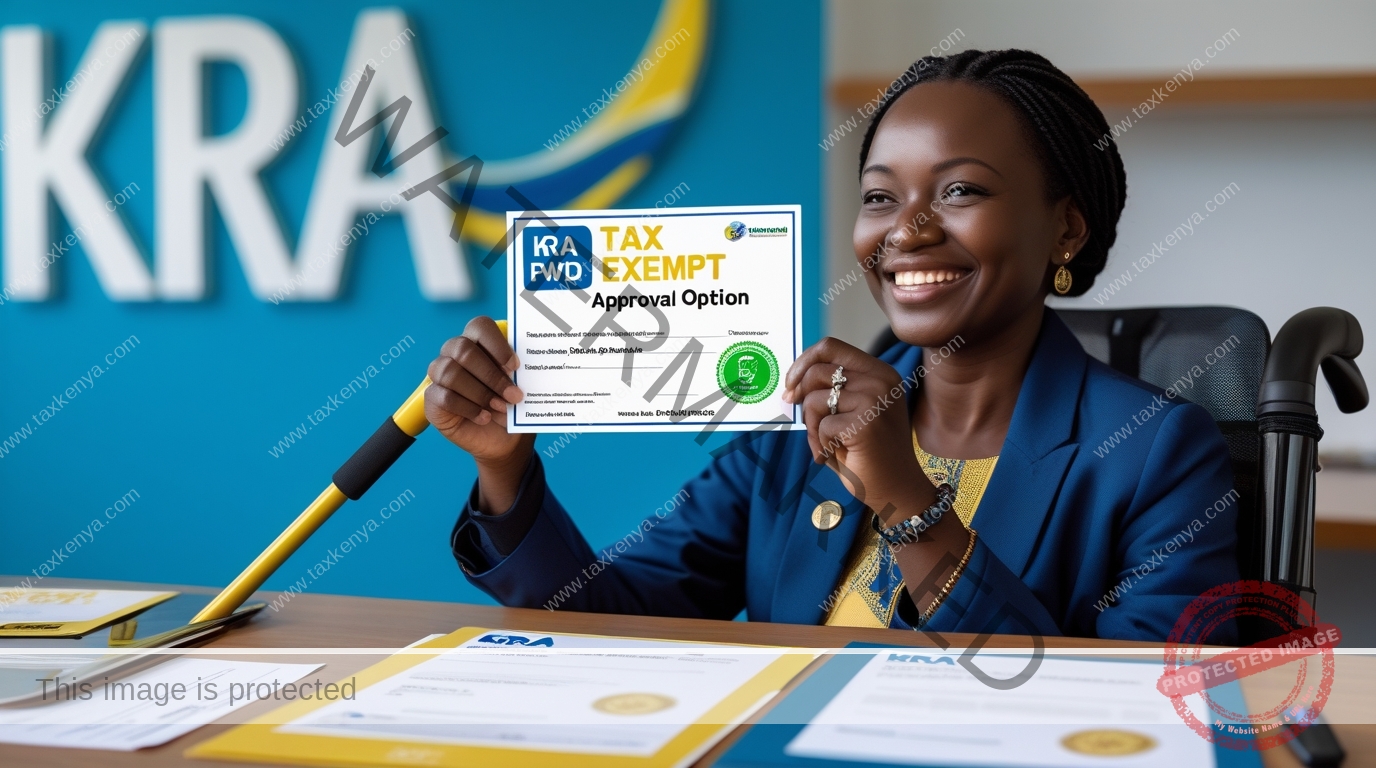
What is the KRA PWD Tax Exemption? If you are a Person with a Disability (PWD) in Kenya, here is some great news: The Kenya Revenue Authority (KRA) offers a tax exemption program that can significantly reduce or even eliminate your income tax burden. Note that tax exemptions apply to personal income (salary, wages, etc.).
But here is the catch: Starting June 9, 2025, KRA is rolling out a vetting process to ensure only eligible individuals benefit from this PWD tax relief.
In this simple guide, we will break down:
a. Who qualifies for the KRA PWD Tax Exemption?
b. Required documents (Do not miss any!)
c. Step-by-step application process
d. Common mistakes to avoid
By the end of the article, you will know exactly how to claim your tax benefits (exemption).
So let us dive in!
Who Qualifies for the KRA PWD Tax Exemption?
Before applying, confirm if you meet these eligibility criteria:
a. Registered PWD – You must have a valid PWD Registration Certificate from the National Council for Persons with Disabilities (NCPWD).
b. KRA PIN – You must have an active KRA PIN.
c. National identification card (ID) or alien identification card
Important to Note about PWD Tax Exemption
It is important to note the following:
a. This exemption applies to income tax, not VAT or other taxes or levies.
b. Both employed and self-employed PWDs can apply.
c. For any tax matters, National Identification card is preferred to a passport.
Required Documents for KRA PWD Tax Exemption
To avoid delays, prepare these 3 essential documents:
1. Original National ID & Copy
These documents must match the name on your KRA PIN and NCPWD certificate. If they do not, you will have some explanation to do and may not be given the certificate. If you do not have an ID, apply at the National Registration Bureau.
2. PWD Registration Certificate (From NCPWD)
The certificate is got from NCPWD offices located countrywide.
a. Obtainable from the National Council for Persons with Disabilities.
b. If you do not have one, visit their offices or apply online via NCPWD portal.
3. KRA PIN Certificate
Download your KRA PIN from the KRA i-Tax portal if you do not have a copy already.
Pro Tip:
Double-check for any expiry dates on the documents. Any expired documents will cause automatic rejection of the PWD tax exemption application .
Step-by-Step Application Process
The following are the steps to get KRA PWD Tax Exemption certificate.

Step 1: Get Required Documents
If you are a PWD in Kenya, ensure you have the following documents:
a. National Identification card or an Alien Identification card (Citizenship is not a basis of PWD tax exemption discrimination).
b. KRA personal Identification Number (PIN certificate).
c. National Council for Persons with Disabilities (NCPWD) certificate.
d. If employed, a recommendation letter from an employer.
Also…
e. Have a working email – on i-Tax
f. An E-Citizen account
Step 2: Apply on E-Citizen
Upload the PWD tax exemption application and the documents on E-Citizen
Step 3: Invitation for Tax Exemption Vetting Exercise on Media
KRA conducts tax exemption vetting exercise. You will be informed of the date for the next tax exemption vetting exercise. Th information is available:
a. Via an email invite.

b. Check in the media for KRA’s announcement on tax exemption vetting exercise (newsletters, KA social media accounts)
c. Tax websites.
d. Tax professionals
Step 4: Visit a Designated KRA Vetting Exercise Office
KRA conducts two types of vetting:
a. Physical vetting – they need to see the applicant and confirm the disability.
b. Document vetting – the documents that you submit online.
KRA allocates specific offices to handle PWD exemptions applications. In the vetting exercise invitation letter, you will be informed of the offices to visit. Find the nearest one via [KRA Office Locator].
For the vetting exercise, you will have to visit in person. No agents or middlemen are allowed to appear on your behalf. KRA insists on direct applications to curb fraud. A qualified KRA officer will verify you and your documents details on the spot.
Step 5: Documents Confirmation
After visiting the KRA offices for vetting and confirmation that you have the originals of the documents you uploaded, they need to be confirmed. The offices will confirm each of the documents that you submitted. The PWD applicant need do nothing else. This is a purely KRA exercise.
Step 6: Await Approval
After the application and vetting, the PWD applicant will have to wait for the processing of the tax exemption. The processing should take 7 – 14 working days. However, this can take more days depending on many issues, for example, the number of applications.

Every application should be aware that the tax exemption is not automatic. The results can be:
a. Qualified – no more documents of vetting required.
b. Denied – person does not qualify for PWD tax exemption.
c. More evidence is required, for example, documents.
What You Get
In the three cases, you will get:
- An email from the KRA informing you of the decision and what to do next.
- If approved, a PWD tax Exemption certificate.
If Approved, What Next?
If approved, you several things should happen:
a. Your tax relief applies immediately and your employer will be required to make adjust in the payroll accordingly.
b. If not employed, start utilising the tax relief immediately in your tax filing.
Current tax Exemption Maximum Amount
Currently, as at the date of this article, the maximum amount is kshs 150,000. Note that this amount may be changed. This means that the first kshs 150,000 on your salary or income, you will not pay PAYE.
Example
Assuming Mr X earns kshs 200,000 per month and has a PWD tax exemption certificate with maximum exemption, what salary is taxable?
Salary – kshs 200,000
Less tax exemption – kshs 150,000
Taxable amount – kshs 50,000

Effect of Tax Exemption on Tax Payable
Utilising the PWD tax exemption reduces the amount of tax payable by reducing the taxable amount. The taxpayer will:
a. Pay less PAYE
b. Pay no PAYE
This will depend on the amount of salary or personal income.
Certificate Inclusion on i-Tax
The details of your exemption are included on i-Tax – without this, your employer or you may not be able to file the PAYE details. If this is not done on time, get in-touch with the KRA.
Insider Advice
Apply early to beat the crowds – beat the rush.
4 Common Mistakes to Avoid
Many PWDs get their tax exemption applications rejected because of the following errors, which most times are avoidable:
1. Using an Expired NCPWD Certificate – Renew it beforehand.
2. Sending Someone Else to Apply – KRA requires in-person submission.
3. Missing Documents – Triple-check before visiting KRA for vetting.
4. Ignoring Deadlines – Late applications may face delays.
Frequently Asked Questions (FAQs)
1. Can I apply online for the KRA PWD Tax Exemption?
Yes, you apply online on E-Citizen, but physical vetting is mandatory to prevent fraud.
2. How much tax will I save?
The tax offices will vet and assess you as per NCPWD classification and give you tax exemption according to this. I can be a maximum of current kshs 150,000 o less.100%
3. What if my employer doesn’t honor the exemption?
Report them to the KRA! Call [KRA Helpline: 020 4 999 999] or send an Email.
Final Thoughts: Do Not Miss Out!
As a PWD in Kenya, the tax exemption is your right. The KRA PWD Tax Exemption is a life-changing benefit, but only if you apply correctly. Application is a simple process, but it takes time – you need to be patient.
If unsure of what to do, do not be afraid – approach the KRA, tax professionals (advisor, consultants, accountants, lawyers, etc.) for help.
Recap
a. Check eligibility (NCPWD certificate, national ID and KRA PIN).
b. Gather documents (ID, PWD cert, PIN).
c. Apply on the E-Citizen
d. Go for vetting
e. Get a PWD tax exemption certificate and start using it.