
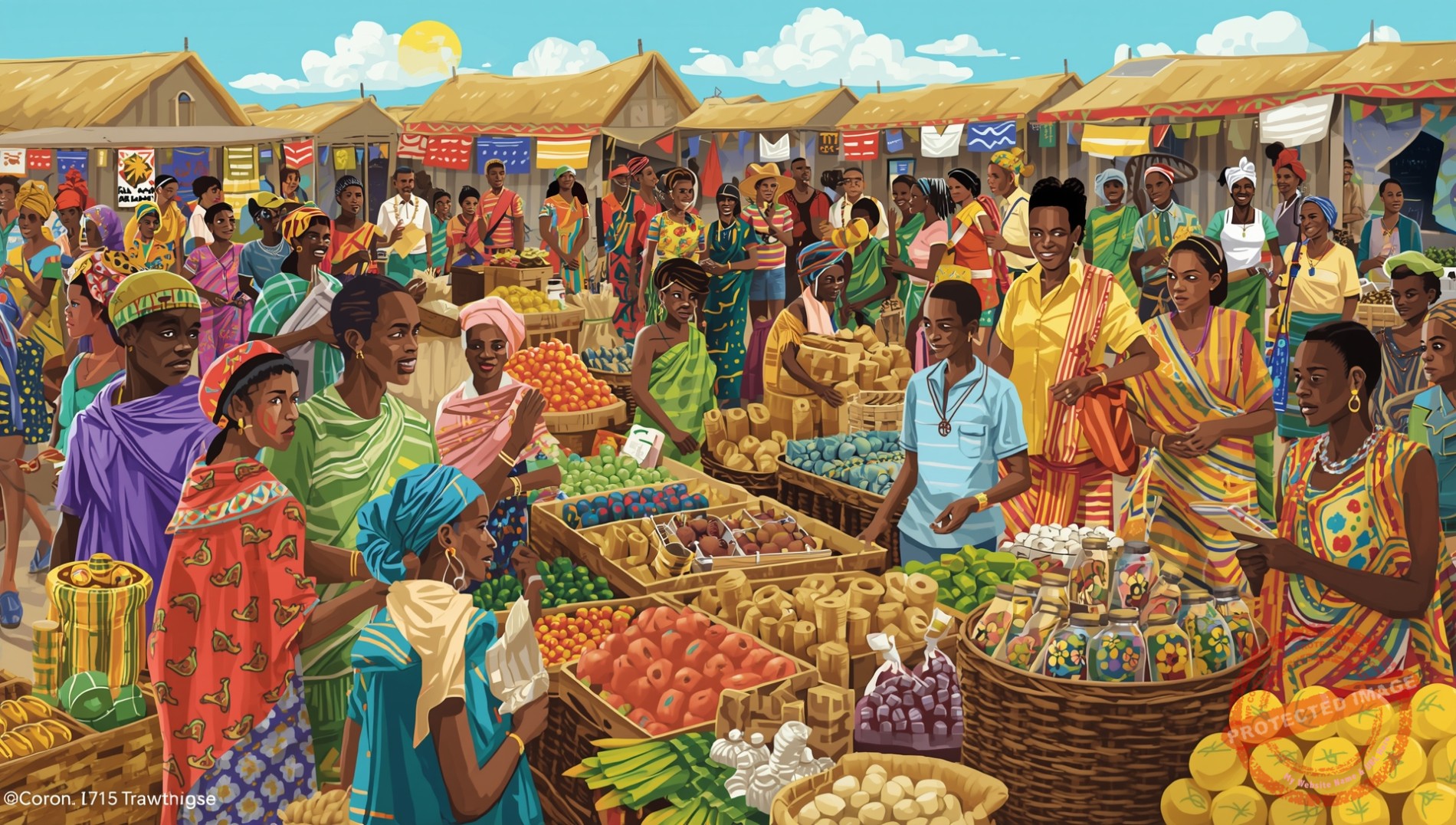
Walk into a typical supermarket or scroll through a popular online shop in Kenya, and you will realise what kind of consumer society we have become. What do you see?
From the phone in your hand and the shoes on your feet to the cooking oil in your kitchen, chances are, a good portion of it was made in another country.

We have become a consumer society. This does not just mean we like to shop. It means our entire economy is increasingly geared towards consuming finished goods, rather than producing them.
And while having a world of products at our fingertips feels like progress, this shift has a dark, hidden cost that is quietly shaping our future.
Let us unpack what this really means for Kenya.
a. What Does a “Consumer Society” Really Mean for Kenya?
Simply put, a consumer society is one where the culture and economy prioritize buying and using goods and services. The identity of “shopper” becomes as important as that of “producer” or “maker.”
In the Kenyan context, this looks like:
a. Malls over Factories – We see more investment in glittering shopping centers to sell imported goods than in building new factories to make our own.
b. Status Through Brands – Social status is increasingly tied to owning the latest imported smartphone, car, or fashion label, rather than valuing locally crafted products.
c. An Economy Leaking Billions – Our demand is directed outward. We are essentially creating jobs in factories in China, the UAE, and Europe, while our own industrial potential stagnates.
We have become a nation that is brilliant at consuming, but we are forgetting how to create. This is the core of the problem.
b. How Imports Are Choking Local Manufacturing

Import business squeezes local businesses out of the market. Imagine you are a local manufacturer of shoes. You have to pay for factory space, Kenyan salaries, electricity, and raw materials.
Then, a container arrives at the port full of shoes from a mass-production factory in Asia. They are sold at a price that is lower than what it costs you to just make them leave alone your profits.
This is the brutal reality for many of our local industries. The effects are devastating:
a. Unfair Competition – International giants benefit from economies of scale and sometimes, government subsidies in their home countries, making it impossible for local startups to compete on price.
b. Stunted Growth – With a small, price-sensitive market, local manufacturers cannot expand. They cannot invest in better machinery or hire more people. They are stuck in survival mode.
c. The Death Spiral – As local factories shrink or close, their suppliers (of packaging, raw materials, etc.) also suffer. The entire manufacturing ecosystem weakens.
c. The Direct Link between Your Shopping Cart and the Unemployment Line
This is where the rubber meets the road. How does buying imported goods cause unemployment?
It is a simple, powerful chain reaction:
a. You choose a cheaper imported shirt over a slightly more expensive Kenyan-made one.
b. That lost sale means the local textile factory has less revenue.
c. With less revenue, the factory cannot hire new workers. It may even have to lay off some of its current staff.

d. Those unemployed workers now have less money to spend in the local economy. That is at the mama mboga, the local butcher, or the public transport.
e. The cycle continues, shrinking the economy and killing jobs at every turn.
Every time we prioritize an import, we are essentially exporting a job. We are voting with our shillings for jobs to be created in other countries. And this is not in Murang’a, Kisumu, or Mombasa.
The unemployment crisis is not just about a lack of jobs. It is about our daily choices actively diverting job creation away from our shores.
d. What the Government Must Do, Urgently
Is there a way out? Shifting away from a consumerist, import-dependent model requires bold, deliberate action. It will not happen by chance. Here is what the government should do with a sense of urgency:
a. Aggressive “Buy Kenyan, Build Kenya”
This cannot be just a slogan. It must be a relentless campaign backed by tangible benefits. Think of significant tax breaks for companies that source over 80% of their materials and labor locally.
Or other tax incentives like credit of excise duty for corporate tax. The government should make it financially stupid not to buy Kenyan.
b. Strategic Protection for Infant Industries
This is Economics 101. The government must temporarily shield our promising local sectors (like leather, textiles, and agro-processing) from being wiped out by predatory imports.
This could be through adjusted tariffs or non-tariff barriers that give our homegrown companies a fighting chance to grow up.

c. Fix the Cost of Doing Business
The reason local products are sometimes more expensive is often due to high electricity costs, costly logistics, and bureaucratic red tape.
The government must tackle these root causes to make local manufacturing competitive.
d. Lead by Example in Procurement
All government institutions, from schools and hospitals to the police force, should be mandated to procure a high percentage of their goods (like uniforms, furniture, and food) from local manufacturers.
This will create an instant, guaranteed demand for locally manufactured products.
The Bottom Line
Becoming a consumer society is a path of least resistance, but it leads to an economic dead end. It trades our long-term sovereignty and self-sufficiency for short-term convenience and perceived choice.
What kind of a country do we want? That is the Kenya we want. We want a Kenya with thriving industries, well-paying jobs. This shared prosperity is one we must make, not just one we buy from.
Our power does not just lie in our wallets as consumers. It lies in our collective will to be a nation of builders again. The choice is ours.

NEXT!
Where does this change begin? This change starts with awareness. Next time you shop, pause. Check the label. Ask, “Is there a Kenyan alternative?” Commit to buying at least one more local product this week.
Share this message, and let us create a wave of demand that our local industries can ride on. Our collective choices are the most powerful economic policy we have.
Related Articles:
a. Understanding International Debt – HERE
b. How Electricity Rationing is Affecting Your Tax Compliance – HERE
c. KRA Tax Penalties – HERE
d. Affordable Housing – HERE